Taking Flight 2011
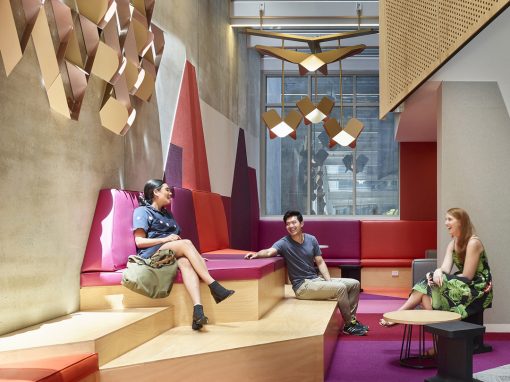
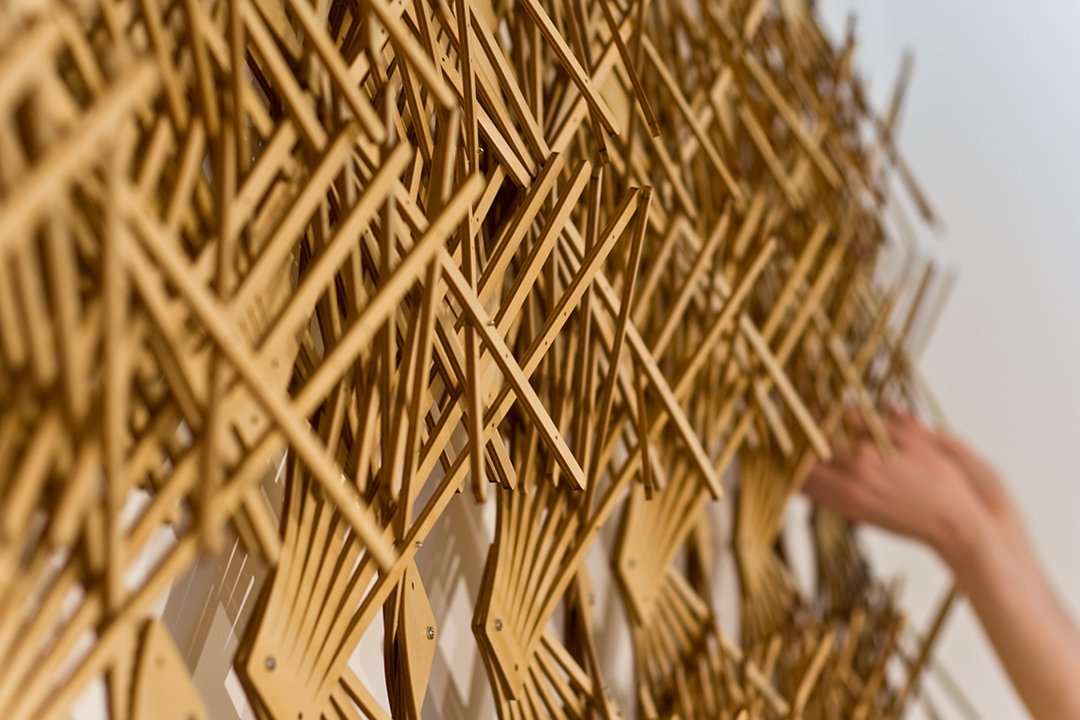
'Taking Flight' was commissioned by Aurecon: a world-class engineering,
management and specialist technical servicing group. Their brief was
to create an inspirational wall work for their Brisbane Office's Reception
Area. 'Aurecon' means golden thought. In the work Waterson aimed to
capture a 'golden' or precious moment evoking a sense of action and
growth; similar to birds alighting from a forest or the flourish of
blooms in spring. The work is made from folded aluminium. The folds
are quite extreme; rather than aluminium it appears to be folded effortlessly
from paper. Many tests were undertaken to achieve this and see how far
the material and process could be pushed. The result has a beautiful
duality: a sense of randomness, dimension and action underpinned by
a hidden three-part system.
Photographs J.Linkins
Taking Flight 2011
'Taking Flight' was commissioned by Aurecon: a world-class engineering,
management and specialist technical servicing group. Their brief was
to create an inspirational wall work for their Brisbane Office's Reception
Area. 'Aurecon' means golden thought. In the work Waterson aimed to
capture a 'golden' or precious moment evoking a sense of action and
growth; similar to birds alighting from a forest or the flourish of
blooms in spring. The work is made from folded aluminium. The folds
are quite extreme; rather than aluminium it appears to be folded effortlessly
from paper. Many tests were undertaken to achieve this and see how far
the material and process could be pushed. The result has a beautiful
duality: a sense of randomness, dimension and action underpinned by
a hidden three-part system.
Photographs J.Linkins
Accumulation 2009/2010
(Ipswich Art Gallery Artwork Commission for ‘Ipswich House Portraits’)
In 2009 Waterson was commissioned, along with 13 other established Queensland
artists, to respond and present a portrait of an iconic Ipswich House.
The works were commissioned as part of Ipswich’s 150 Year Celebrations,
and were exhibited at the Ipswich Art Gallery in late 2010. Drawing
from her architectural studies, Waterson reduced the Rhossilli House
to essential horizontal strata, offering an impression or glimpse of
the house on approach and entry; through to detail.“My process of making
questions the completeness of memory and threshold of recognition. Via
parts; record, accumulated memories, uncovered fragments and stories;
the house and its fragile sense of place are refound.”
Photographs J.Linkins
Accumulation 2009/2010
(Ipswich Art Gallery Artwork Commission for ‘Ipswich House Portraits’)
In 2009 Waterson was commissioned, along with 13 other established Queensland
artists, to respond and present a portrait of an iconic Ipswich House.
The works were commissioned as part of Ipswich’s 150 Year Celebrations,
and were exhibited at the Ipswich Art Gallery in late 2010. Drawing
from her architectural studies, Waterson reduced the Rhossilli House
to essential horizontal strata, offering an impression or glimpse of
the house on approach and entry; through to detail.“My process of making
questions the completeness of memory and threshold of recognition. Via
parts; record, accumulated memories, uncovered fragments and stories;
the house and its fragile sense of place are refound.”
Photographs J.Linkins
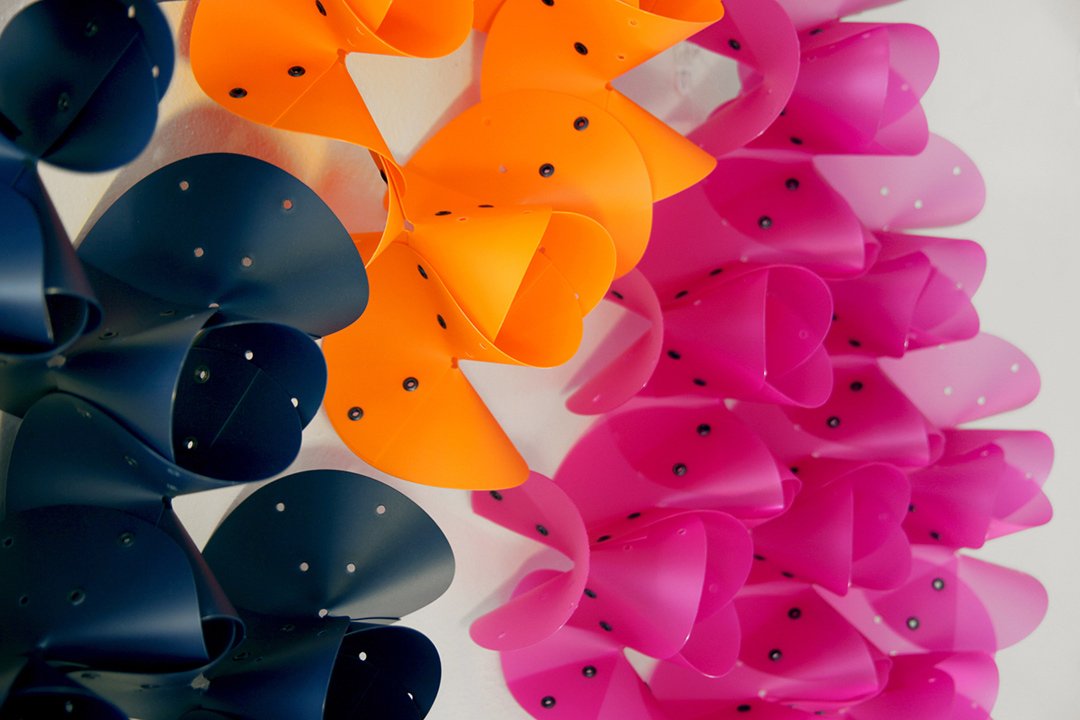
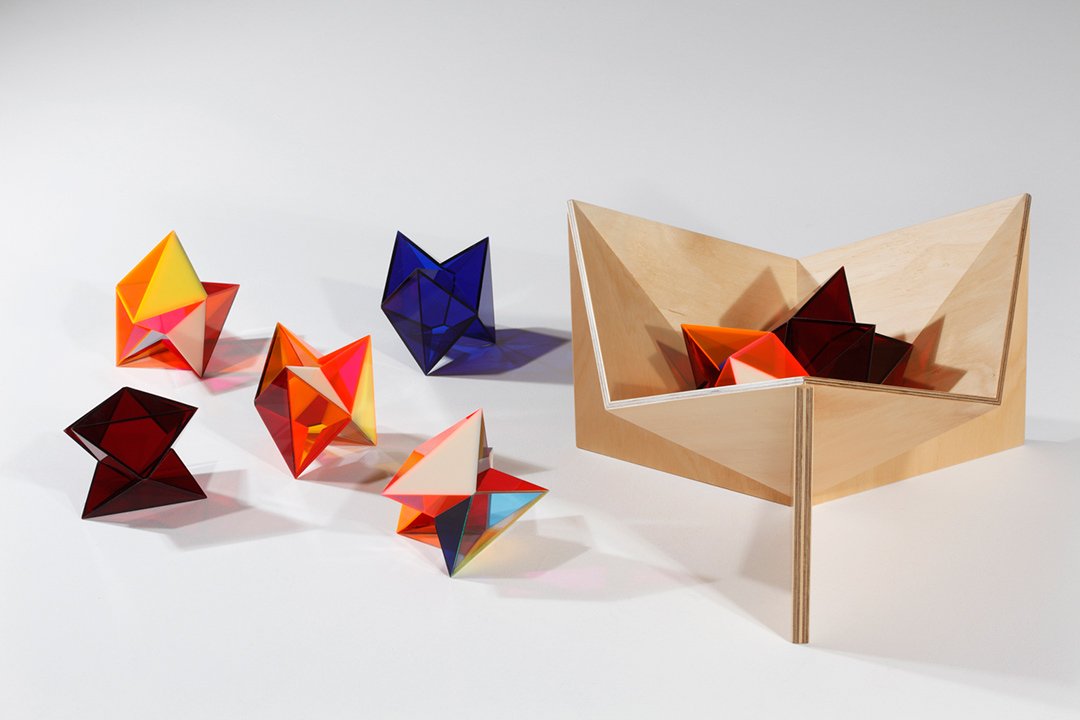
The Bloom Series 2009
The Bloom Series is Christina Waterson’s latest range of furniture and
home wares. The series celebrates natural geometries and growth patterns,
with each combining male and female pairings. Waterson’s considered
manipulation of scale, materiality and combination have generated beautiful,
distinctly different yet interrelated functional objects.First Editions
of the Bloom Series use recycled acrylic and printed corflute, and certified
plywood’s. Waterson was recently awarded a 2010 Australian Council Grant
through the Visual Arts Board to create the Pixel Screen in a sheet
metal edition. The seven-piece Bloom Series speaks of Waterson’s craft.
It is imbued with her desire to make meaningful places and objects to
be cherished: inspiring us to greater things.
Photographs J. Linkins
The Bloom Series 2009
The Bloom Series is Christina Waterson’s latest range of furniture and
home wares. The series celebrates natural geometries and growth patterns,
with each combining male and female pairings. Waterson’s considered
manipulation of scale, materiality and combination have generated beautiful,
distinctly different yet interrelated functional objects.First Editions
of the Bloom Series use recycled acrylic and printed corflute, and certified
plywood’s. Waterson was recently awarded a 2010 Australian Council Grant
through the Visual Arts Board to create the Pixel Screen in a sheet
metal edition. The seven-piece Bloom Series speaks of Waterson’s craft.
It is imbued with her desire to make meaningful places and objects to
be cherished: inspiring us to greater things.
Photographs J. Linkins
The Bloom Series 2009
The Bloom Series is Christina Waterson’s latest range of furniture and
home wares. The series celebrates natural geometries and growth patterns,
with each combining male and female pairings. Waterson’s considered
manipulation of scale, materiality and combination have generated beautiful,
distinctly different yet interrelated functional objects.First Editions
of the Bloom Series use recycled acrylic and printed corflute, and certified
plywood’s. Waterson was recently awarded a 2010 Australian Council Grant
through the Visual Arts Board to create the Pixel Screen in a sheet
metal edition. The seven-piece Bloom Series speaks of Waterson’s craft.
It is imbued with her desire to make meaningful places and objects to
be cherished: inspiring us to greater things.
Photographs J. Linkins
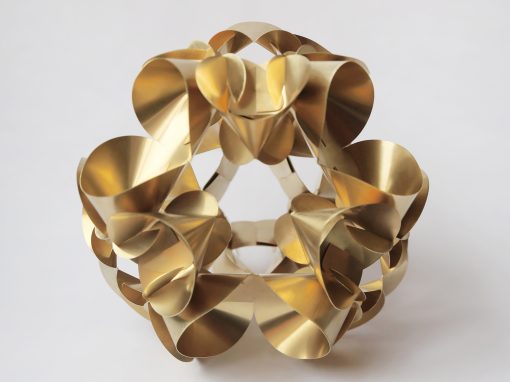
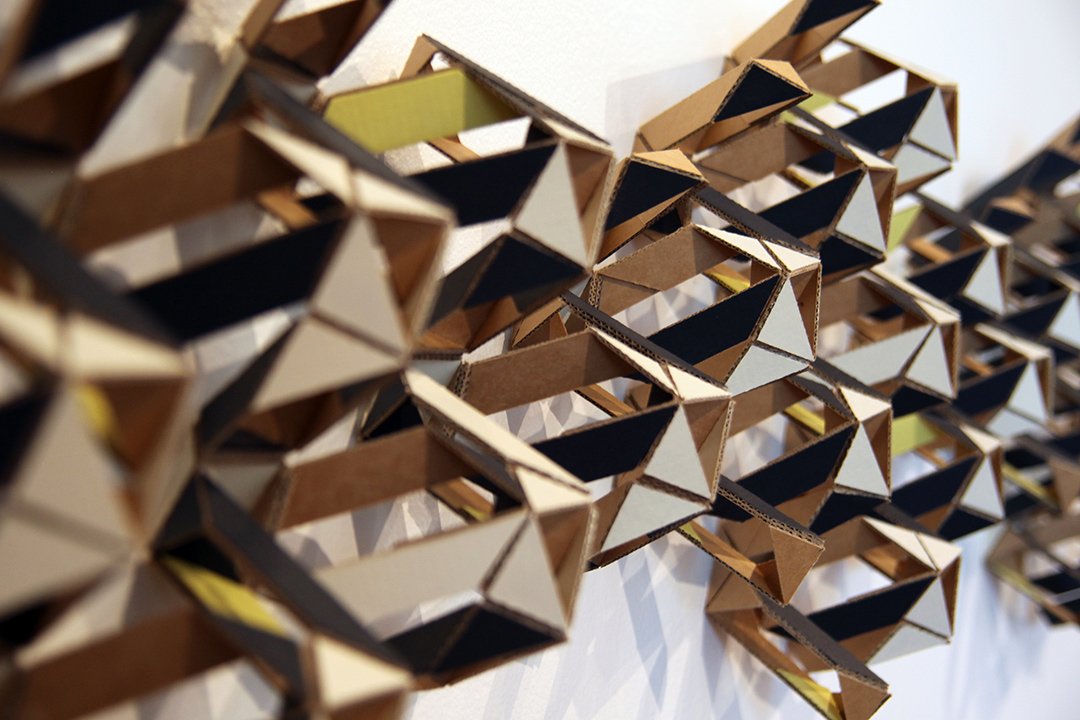
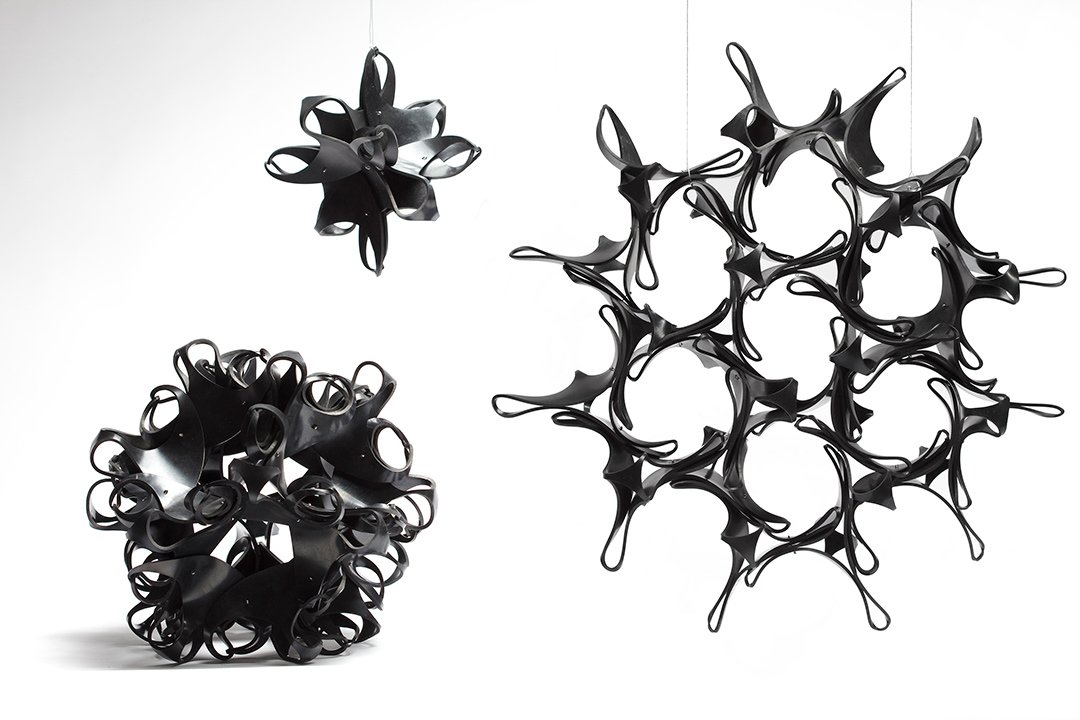
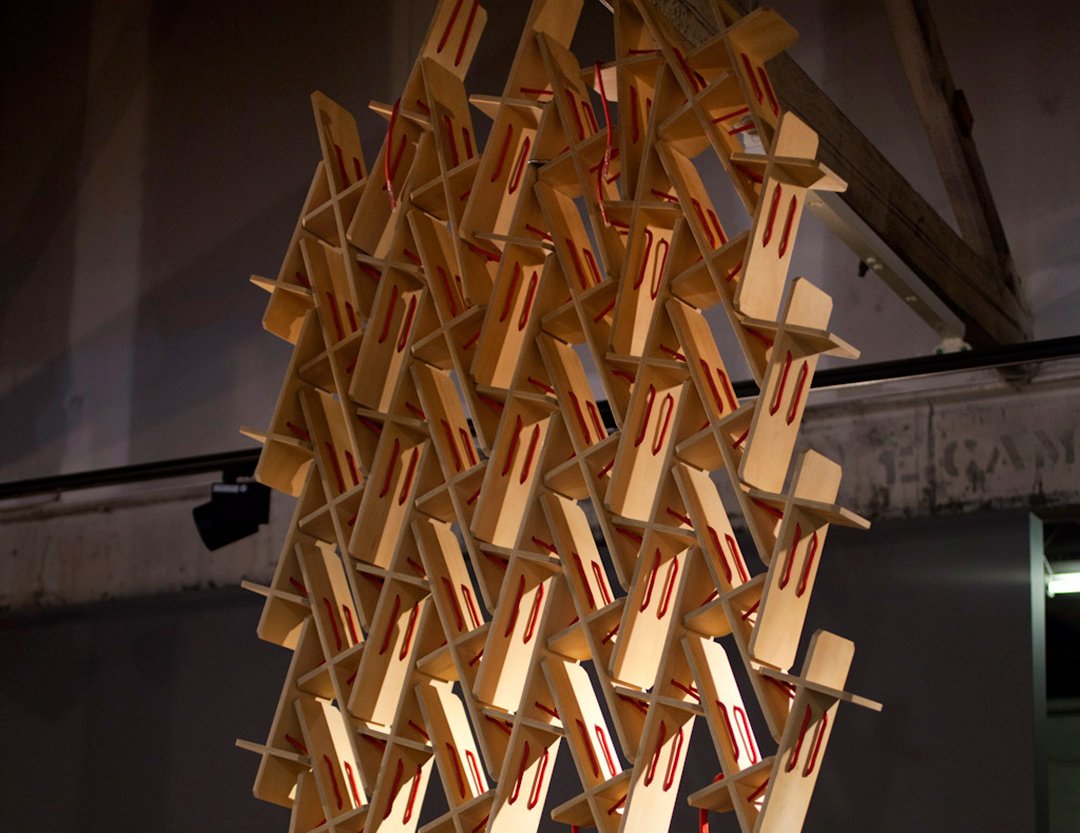
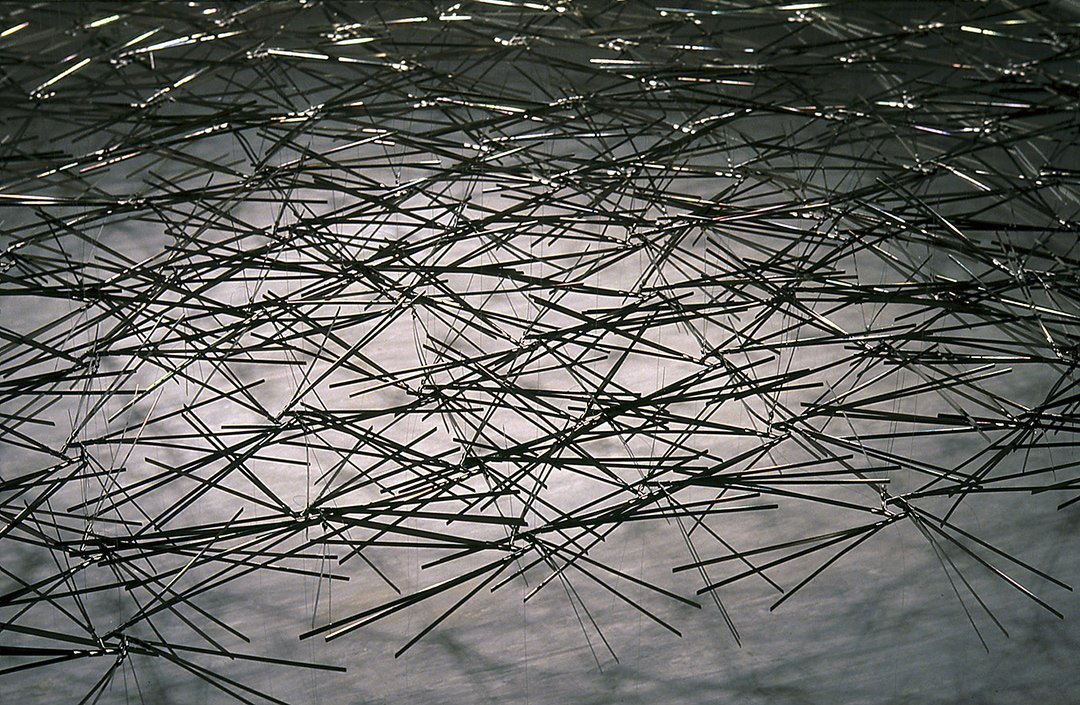
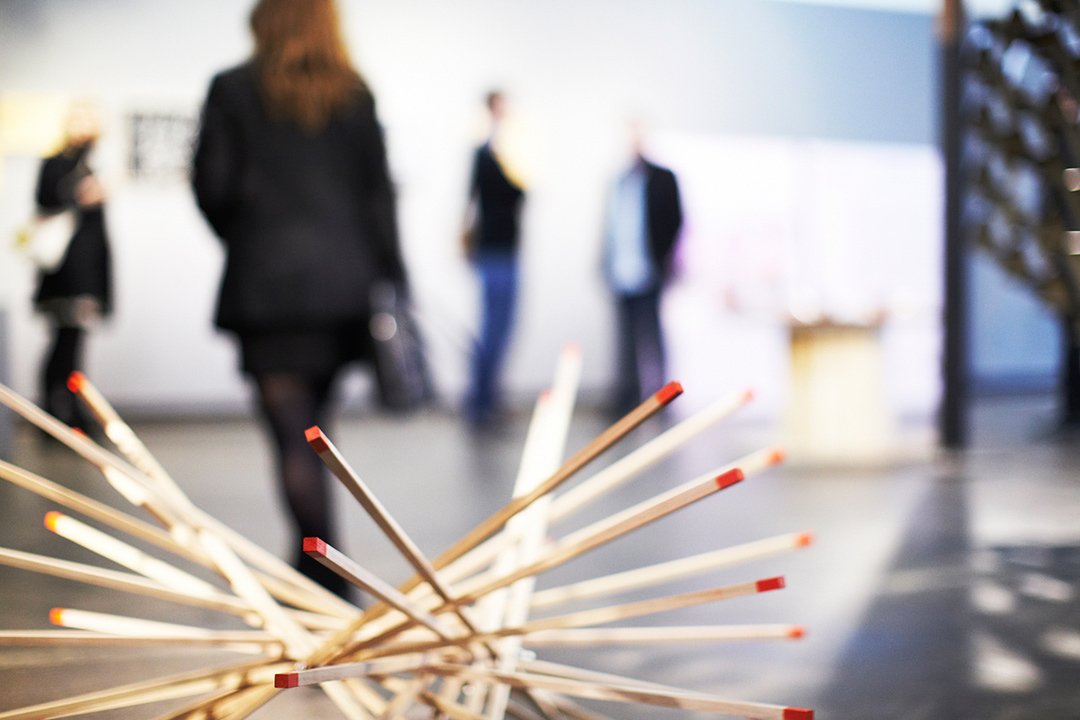
Komodo Series 2008
The Komodo Series, released in 2008, utilizes a base element that when
interlocked across a number of scales and configurations creates tactile
objects, and surfaces. The series can be made in cardboard, plywood,
polypropylene, corflute and stainless steel and include sculptural forms
and lights, screens and wall hangings. It makes visible Waterson’s playful
testing process while allowing the individual to adapt their environment
sustainably.The Komodo Series was realized through a 2008 Arts Queensland
Sector Project Development Grant. Artisan: idea skill product and Living
Edge also supported the project. See Focus for more details.
Photographs A.Murphy
Komodo Series 2008
The Komodo Series, released in 2008, utilizes a base element that when
interlocked across a number of scales and configurations creates tactile
objects, and surfaces. The series can be made in cardboard, plywood,
polypropylene, corflute and stainless steel and include sculptural forms
and lights, screens and wall hangings. It makes visible Waterson’s playful
testing process while allowing the individual to adapt their environment
sustainably.The Komodo Series was realized through a 2008 Arts Queensland
Sector Project Development Grant. Artisan: idea skill product and Living
Edge also supported the project. See Focus for more details.
Photographs A.Murphy
Komodo Series 2008
The Komodo Series, released in 2008, utilizes a base element that when
interlocked across a number of scales and configurations creates tactile
objects, and surfaces. The series can be made in cardboard, plywood,
polypropylene, corflute and stainless steel and include sculptural forms
and lights, screens and wall hangings. It makes visible Waterson’s playful
testing process while allowing the individual to adapt their environment
sustainably.The Komodo Series was realized through a 2008 Arts Queensland
Sector Project Development Grant. Artisan: idea skill product and Living
Edge also supported the project. See Focus for more details.
Photographs A.Murphy
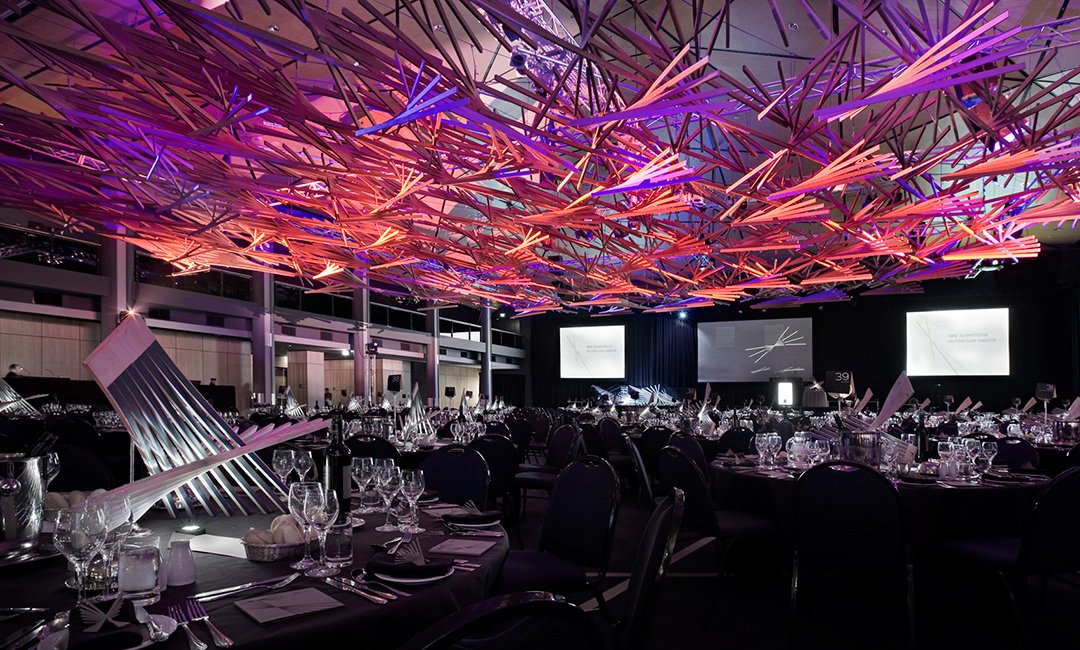
The 2007 RAIA Queensland Architecture Awards Event
Installation
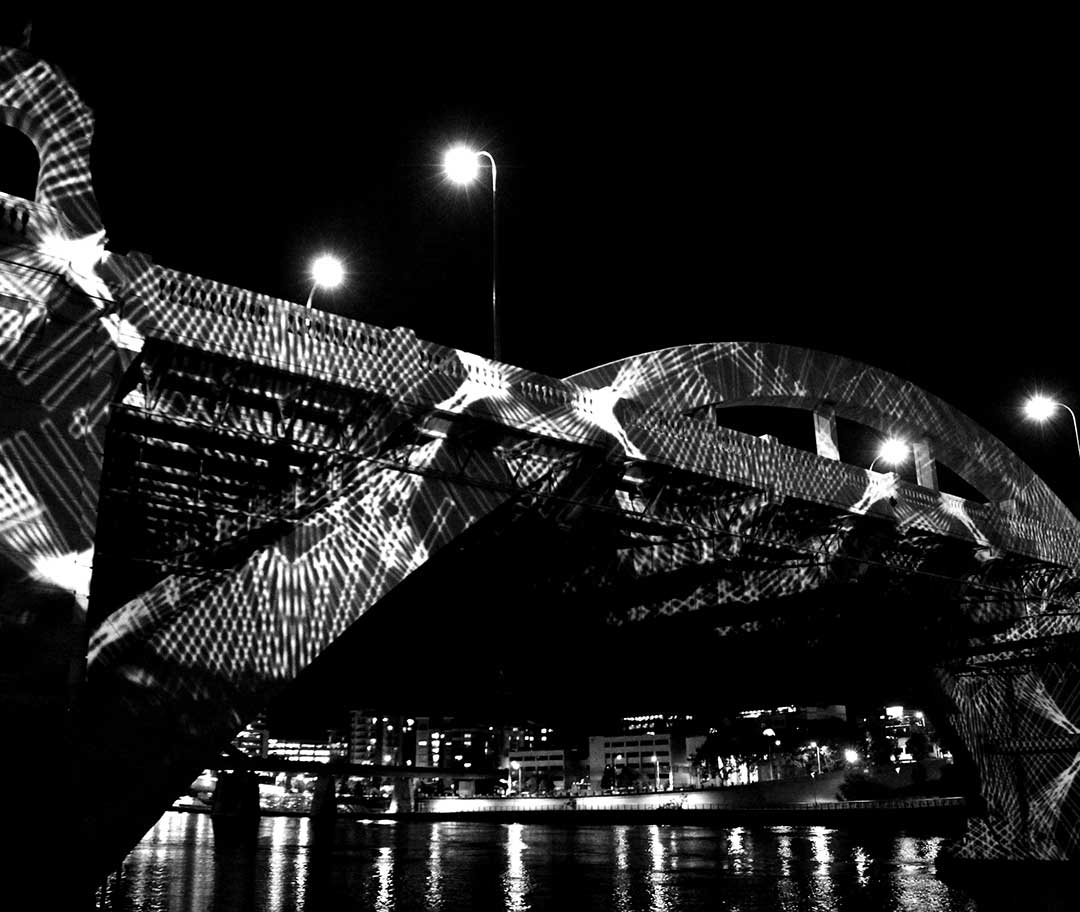
This one night event was realized by Waterson in collaboration with
Cox Rayner Architects and utilized recycled materials and simple construction
processes. The rationale for the 2007 event was “to inspire the architects
attending to make meaningful places and rethink the way they use materials”.
The event experience was enfolding, meditative and uplifting with the
works’ visual density appearing to alter when viewed from different
approaches.Forms were realized at three physical scales: as intimate
brooches, intermediate table centerpieces and encompassing sculptural
ceiling, and further as a projected animation. The 450 handmade recycled
cardboard brooches were presented as personal gifts to each of the guests.
Photographs CFJ Photography
The 2007 RAIA Queensland Architecture Awards Event
Installation
This one night event was realized by Waterson in collaboration with
Cox Rayner Architects and utilized recycled materials and simple construction
processes. The rationale for the 2007 event was “to inspire the architects
attending to make meaningful places and rethink the way they use materials”.
The event experience was enfolding, meditative and uplifting with the
works’ visual density appearing to alter when viewed from different
approaches.Forms were realized at three physical scales: as intimate
brooches, intermediate table centerpieces and encompassing sculptural
ceiling, and further as a projected animation. The 450 handmade recycled
cardboard brooches were presented as personal gifts to each of the guests.
Photographs CFJ Photography
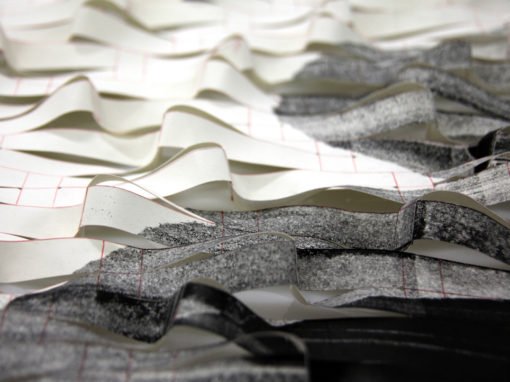
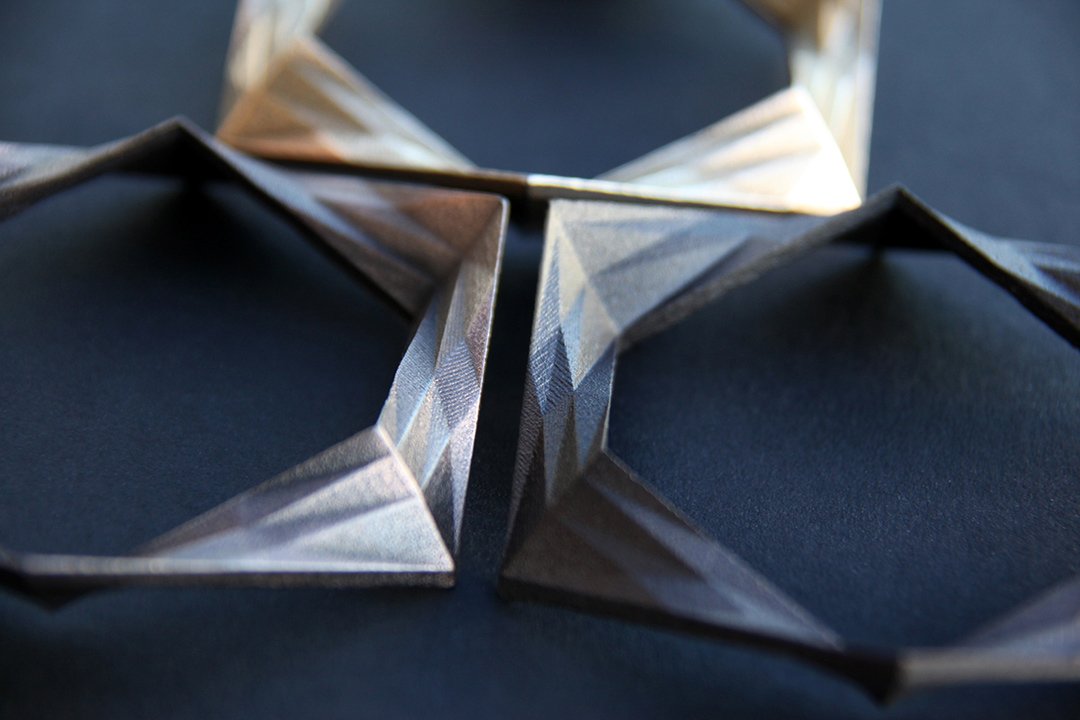
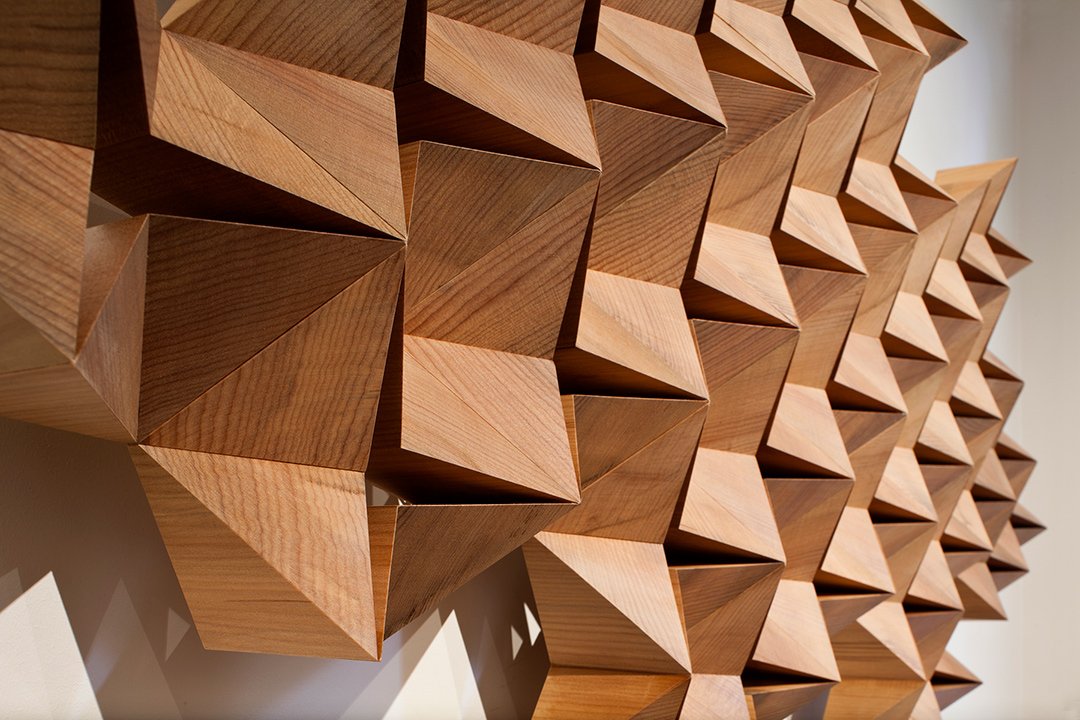
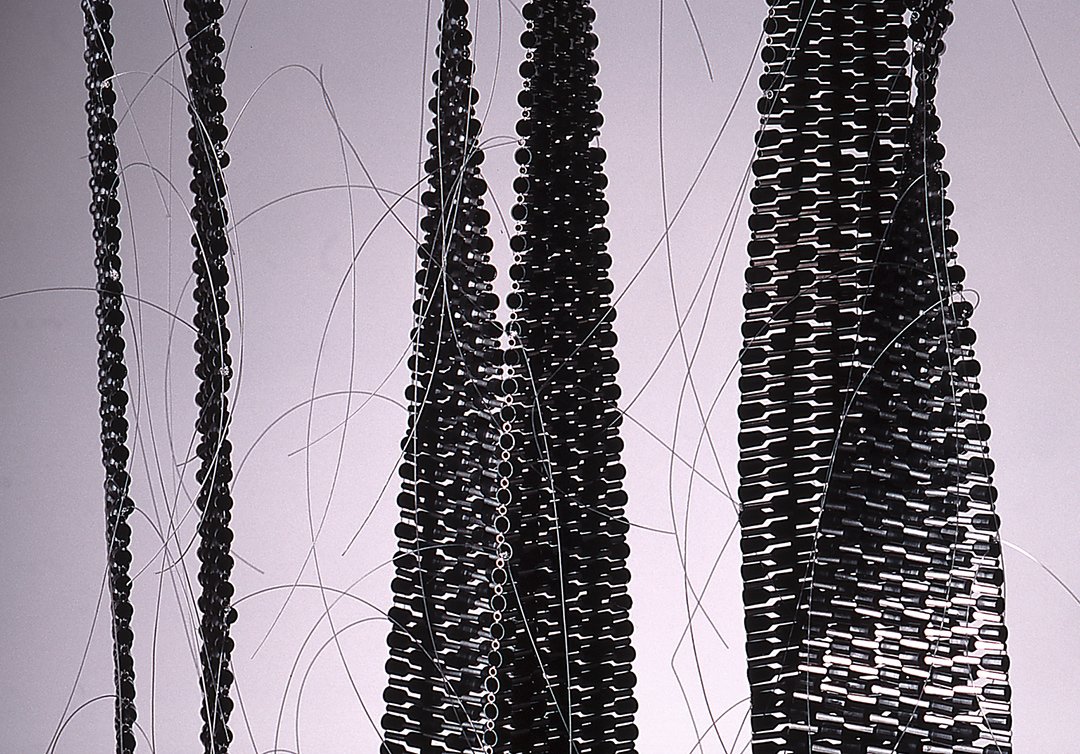
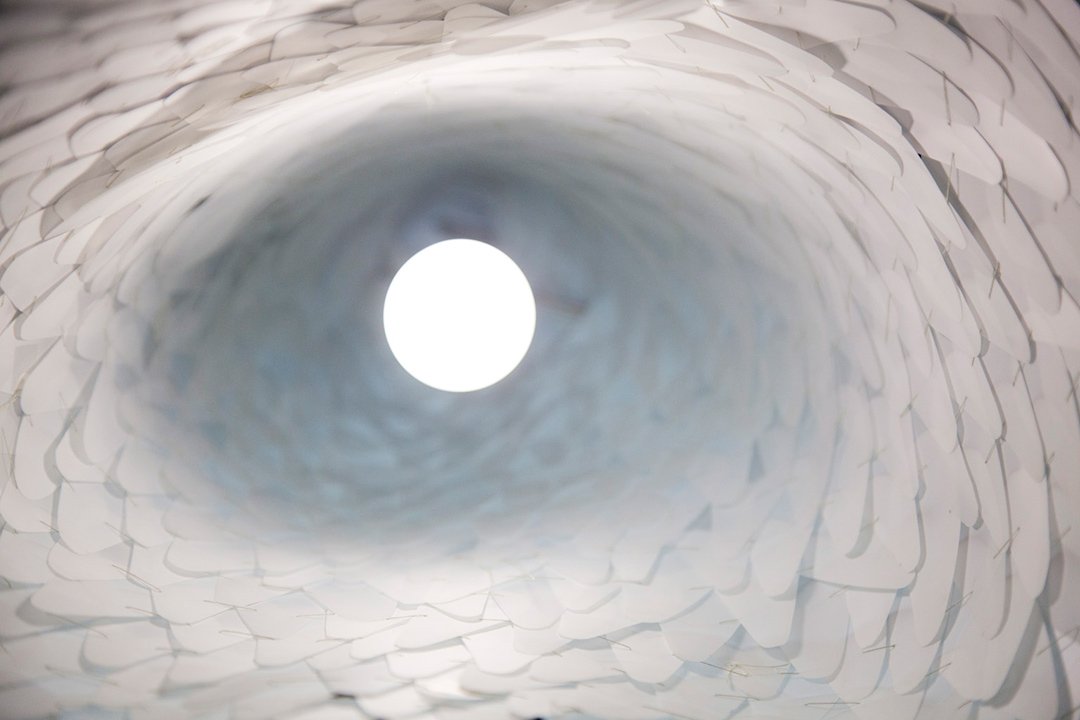
The Ocular Series 2008
The Ocular Series shows a transformation of every day materials through
cutting, folding and re-assembly to make sensually latent surfaces.
Waterson likens this process to remembering: an ongoing process of fragmentation
and recollection. Each subtle variation in this process yields a different
outcome having inherent oppositions of depth/shallow, that which is
concealed/ revealed and remembered/forgotten. This series has future
applications as sheaths, light shades and applied patterns.
Photographs D.Sandison and C.Waterson
The Ocular Series 2008
The Ocular Series shows a transformation of every day materials through
cutting, folding and re-assembly to make sensually latent surfaces.
Waterson likens this process to remembering: an ongoing process of fragmentation
and recollection. Each subtle variation in this process yields a different
outcome having inherent oppositions of depth/shallow, that which is
concealed/ revealed and remembered/forgotten. This series has future
applications as sheaths, light shades and applied patterns.
Photographs D.Sandison and C.Waterson